Prologue
The W(hack)o Cracko Brothers
Two Fourteen-Year-Old Twins and One Telephone Line
Peter and I were identical twins, collaborators, competitors and occasionally each other’s worst technical-support problem.
At fourteen, we became obsessed with computers, modems, software, bulletin boards, video games, VAX/VMS systems and telecommunications.
We learned by experimenting.
We learned by taking things apart.
We learned at night.
Sometimes we learned by fixing what we had broken.
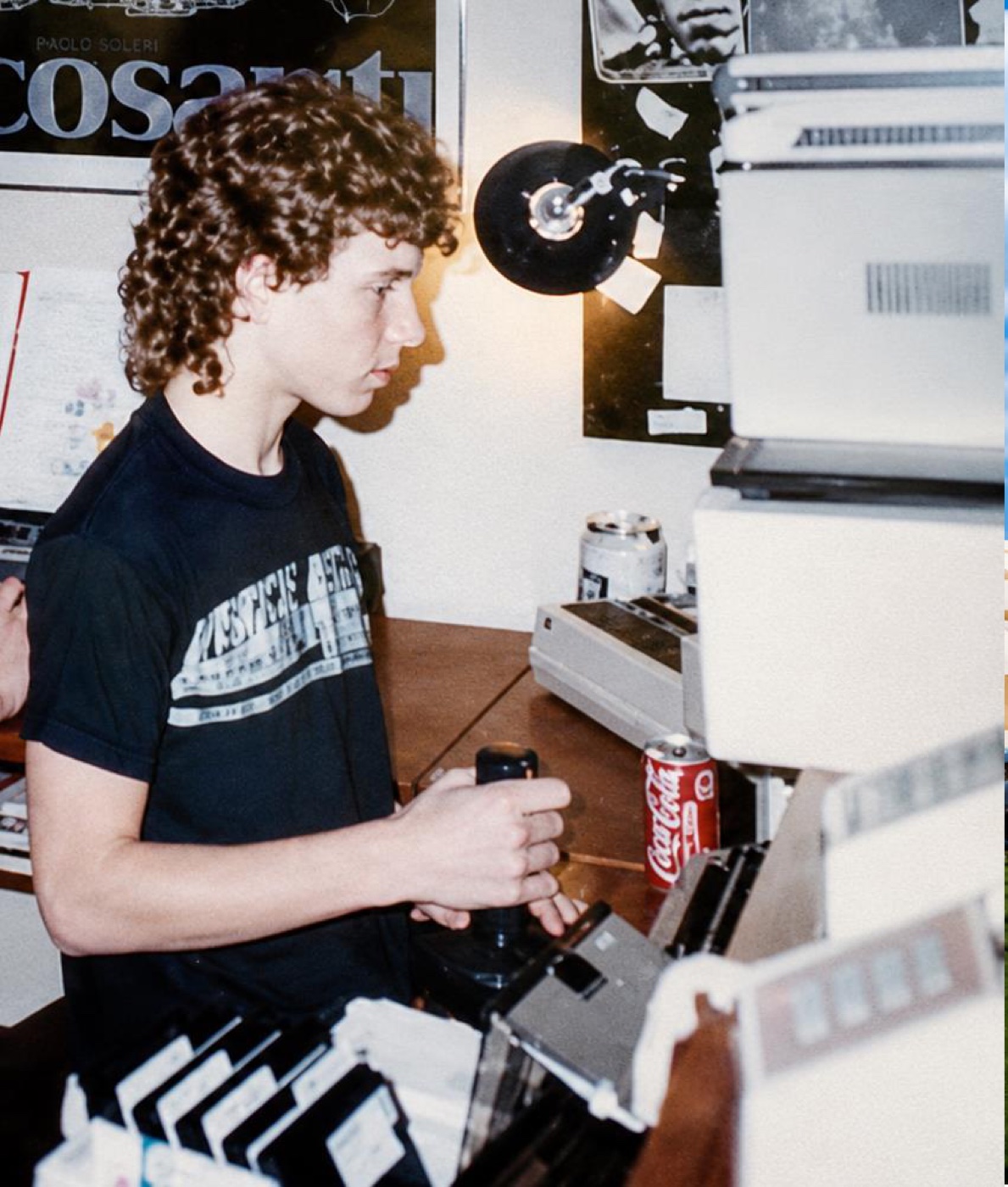
“Peter and I were not thinking about careers. We were trying to understand a new world most adults did not know existed. School started early. The modem world did not close.”
Our working family manuscript describes those BBS years as the beginning of the brothers’ technical story and as the foundation for much of what followed. It is also clear that the manuscript remains a draft requiring continued fact-checking and legal review.
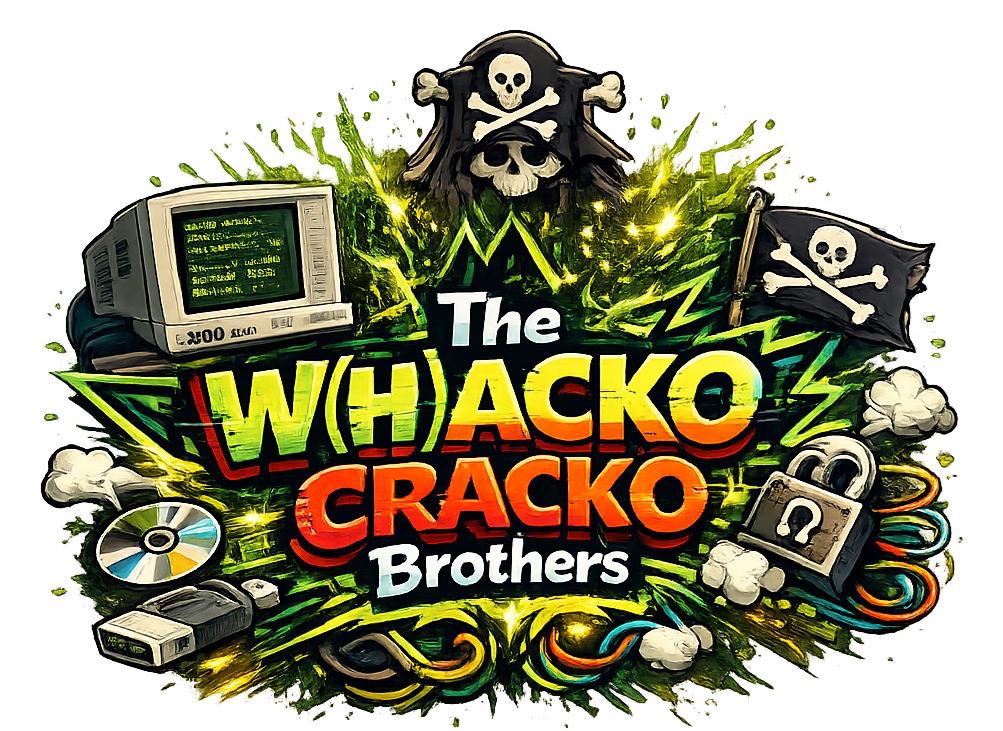
Whackoland BBS
Before Websites, You Dialed the Computer Itself
A caller’s modem dialed directly into the telephone line connected to our computer.
If another user was already connected, the next person received a busy signal.
If the computer failed, the community disappeared until we repaired it.
There was no cloud provider.
There was no automated failover.
There was no trust-and-safety department.
There was a sysop.
The system operator installed the software, created accounts, managed permissions, organized message boards, reviewed uploads, removed disruptive users, backed up the system, maintained the computer and modem, and decided what kind of community the system would become.
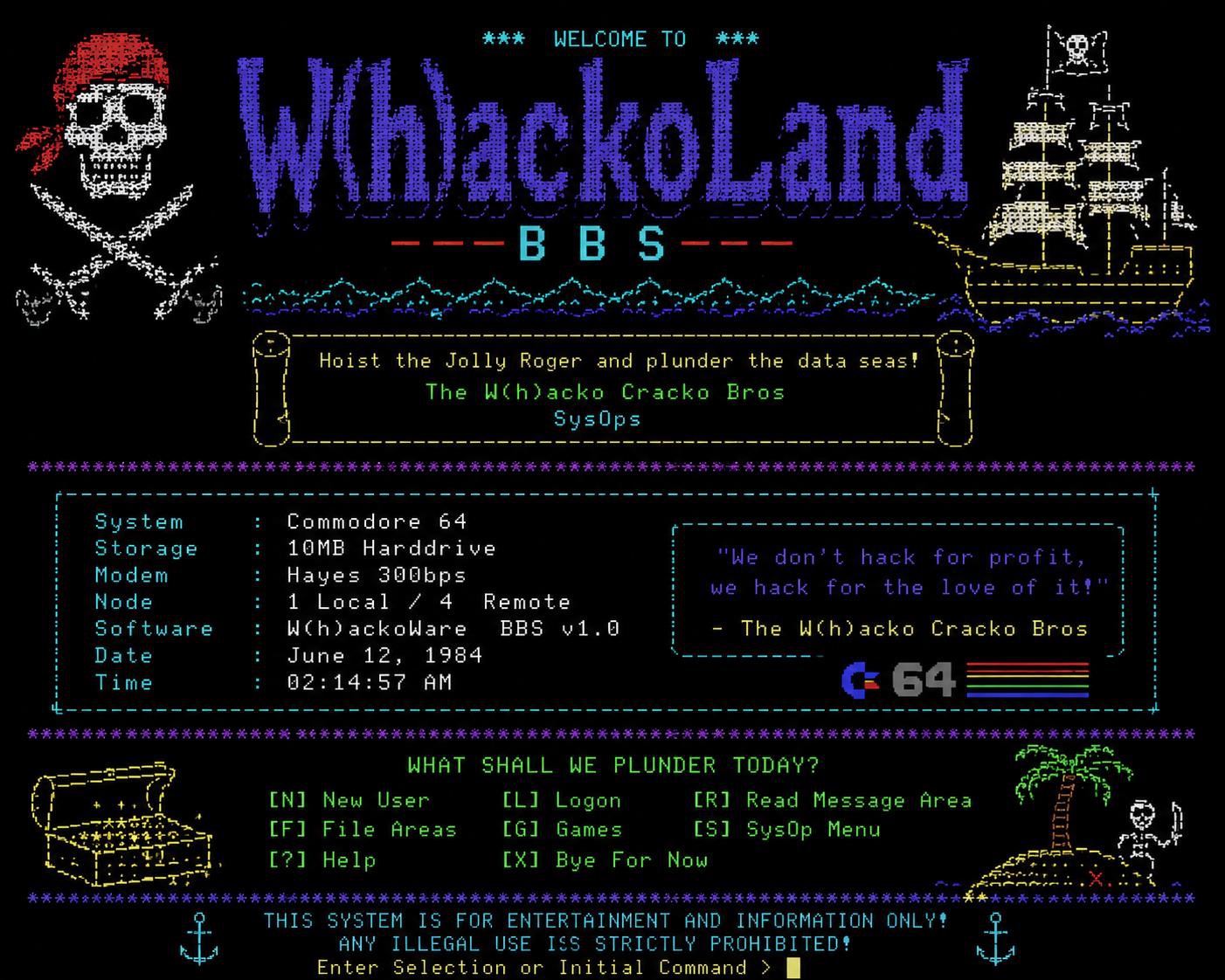
Contemporary Reporting
A February 1986 Phrack entry documented Whackoland as a 300/1200-baud BBS operated by the W(hack)o Cracko Brothers, with 40 megabytes of storage, customized features, private sections and an intentionally exclusive limit of 100 users. (Phrack)
█
“Running Whackoland taught me that technology and community could not be separated. You could build a technically brilliant system and still create a terrible community. You could attract wonderful users and lose everything if the hardware failed. Whackoland was the first time I was operating a platform for other people.”
Metal Shop and Phrack
Whackoland was not the only important St. Louis system.
Randy Tischler, known as Taran King, operated Metal Shop BBS.
Craig Neidorf, known as Knight Lightning, became his collaborator and co-editor.
Contemporary Reporting
The first issue of Phrack was released on November 17, 1985. It described itself as a collection of electronic files based at Metal Shop, encouraged other bulletin boards to redistribute the material and invited writers and groups to submit future articles. (Phrack)
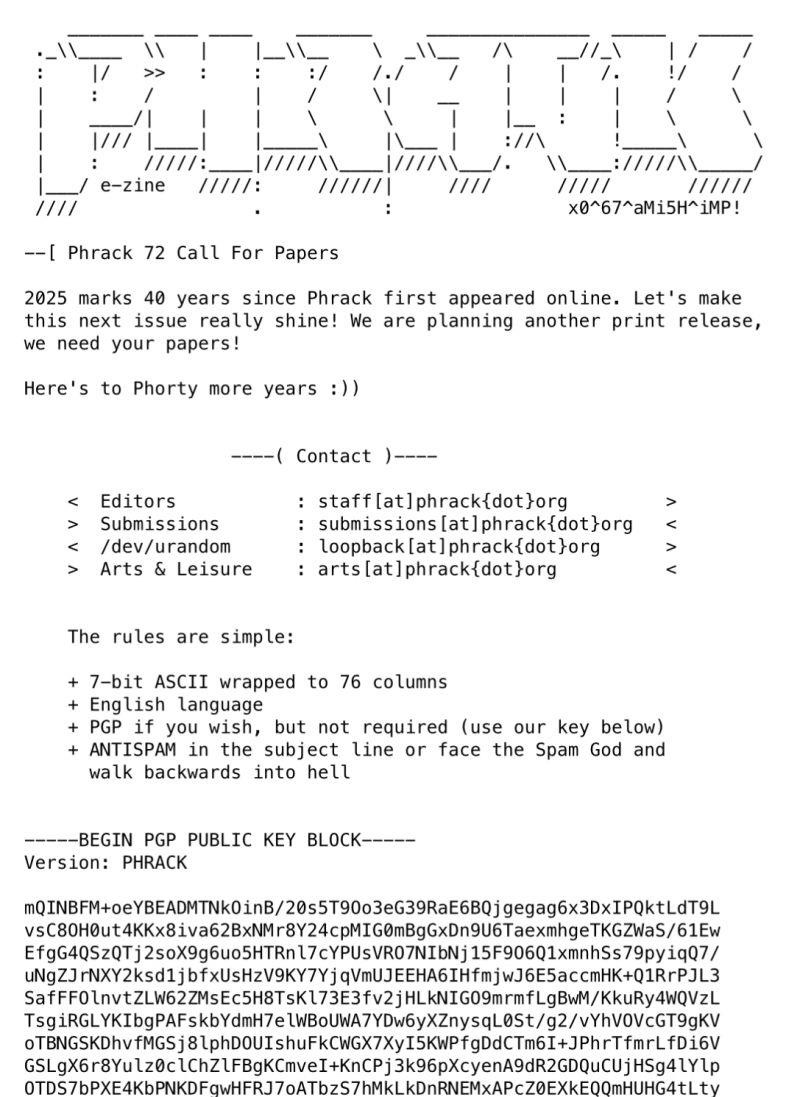
This was digital-native publishing before the Web.
- Electronic files instead of web pages.
- Bulletin boards instead of websites.
- Handles instead of public identities.
- Dial-up distribution instead of a content-delivery network.
- ASCII instead of responsive design.
“Randy, Craig, Peter and I were young, competitive, opinionated and convinced our system mattered more than the other system. In other words, we were already behaving like technology founders. We competed for users, information, contributors, recognition and technical credibility. Together, we helped make St. Louis an unlikely center of early digital culture.”
- Phrack launched before the proposed TAP revival.
- Whackoland and Metal Shop were competing systems within the same St. Louis scene.
- The TAP discussions intensified the rivalry, but they did not cause Randy and Craig to create Phrack.
TAP Magazine
A Teenage Media Acquisition That Almost Happened
Before Phrack, there was TAP.
Its roots reached back to the technological counterculture surrounding the Youth International Party Line and people including Abbie Hoffman. A later TAP editor used the handle Cheshire Catalyst.
Peter and I initially discussed creating the Whackoland Gazette.
Then we became involved in conversations about reviving TAP.
Contemporary Reporting
A March 1986 Phrack report stated that the W(hack)o Cracko Brothers were planning to take over or restart TAP, but the article openly questioned whether Cheshire Catalyst had formally transferred the name. It listed proposed regional editors, staff members, subscription rates, online access and an ambitious plan for a monthly 30-to-40-page color magazine. (Phrack)
The proposed participants included:
We were teenagers.
We had a BBS.
We were discussing a national magazine, a Unix service, memberships and a convention.
What could possibly go wrong?
“My memory is that Cheshire Catalyst and Abbie Hoffman were prepared to let us carry the TAP name forward. At first, it sounded extraordinary. Then I began thinking about the legal exposure, the material, the attention and the responsibility. I decided the risk was larger than we were prepared to manage and chose not to continue.”
The documented record supports the existence of the discussions and proposed project. My recollection involving direct approval from Abbie Hoffman remains a Founder Recollection until correspondence or another participant corroborates it.
The project did not launch as announced.
Phrack continued and became one of the most durable publications in hacker and computer-security culture.
The New TAP experience taught me an early lesson I would relearn in much larger companies:
Seeing the opportunity is not enough. The organization, funding, legal structure, timing and execution all have to survive the idea.
Curiosity and Consequences
The early modem years included genuine technical discovery.
They also included actions that crossed legal and ethical boundaries.
Contemporary Reporting
The February 1986 Phrack report included a colorful account of the Roberts twins attracting telecommunications and law-enforcement attention, losing computer equipment and receiving probation and community-service requirements. The same article mixed firsthand information, scene gossip, humor and unverified allegations, so it should be treated as a period artifact rather than a complete legal history. (Phrack)
“Curiosity is powerful. Curiosity without judgment can become destructive. Peter and I learned both lessons early. The positive part was discovering networks, software, communities and the enormous possibilities of connected computers. The harder lesson was that being able to do something does not make it responsible, ethical or legal.”
Built Before Cloud does not romanticize illegal conduct.
The important story is how a teenage obsession with connected systems became a lifelong effort to build legitimate infrastructure at increasingly larger scales.
Founder Recollection
My manuscript also describes a later full-circle relationship with Kevin Yarborough, whom I remember as the telecommunications-security professional involved in tracing the activity that brought the teenage experiments to the attention of authorities. Years later, I hired him. That account remains a founder recollection until Kevin or original records corroborate it.
What Whackoland Taught Me
“Whackoland was not the Internet. But it taught me how the Internet would feel. Remote users. Digital identities. Online communities. Distributed software. Information moving faster than institutions. Technology collapsing geography.”
From Whackoland to J&G Computer Solutions
Whackoland connected people to one computer.
My next education involved connecting computers to one another.
At J&G Computer Solutions, I worked with Apple computers, Novell networks, Windows systems, routers, printers and business applications that were not naturally designed to communicate.
Today, integration is expected.
Then, making different computing environments cooperate could be difficult and highly specialized.
“At Whackoland, I learned to connect remote people to one computer. At J&G, I learned to connect different computers inside a company. Savvis began when I started asking how to connect entire companies—and eventually a country—more intelligently.”
My historical manuscripts identify the J&G period as the bridge between the teenage BBS years and the creation of DiamondNet, later Savvis.
Whackoland Connected One User at a Time.
Savvis Needed to Connect a Country.
The cloud was not invented in a moment. It was built layer by layer.
Platformz brings those layers together.